
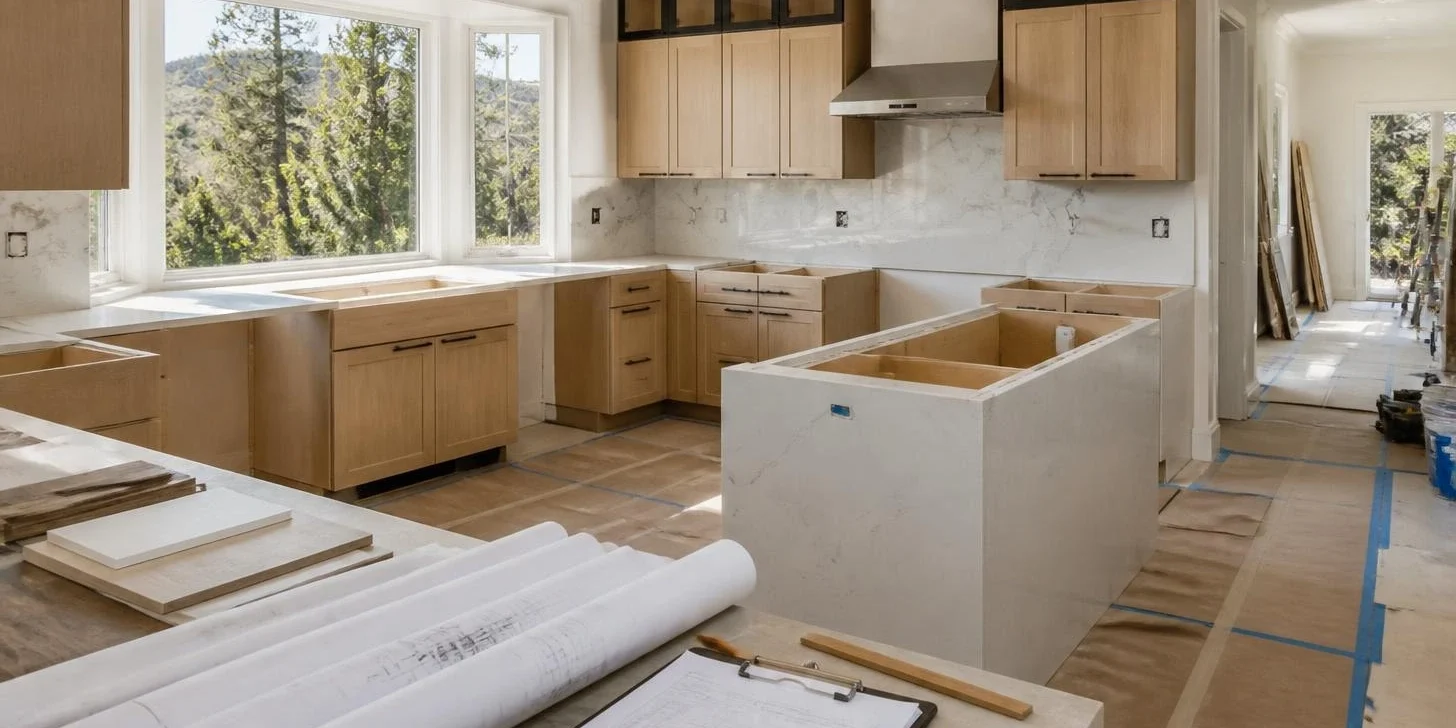
Kitchen Remodel Permit in San Mateo County: 2026 Guide
Most kitchen remodels in San Mateo County need a permit at some point. If your project touches plumbing, electrical, mechanical systems, or the structure of the house, plan on permits and inspections. Plain finish work is sometimes okay without one. But the real answer comes down to two things: what you’re actually changing, and which office covers your property. And here’s the part that catches people off guard. San Mateo County doesn’t hand out building permits for every home inside county lines. At Rightway Home Builders, this is one of the first things we sort out with homeowners before any work gets planned. The County Planning and Building Department deals with projects in unincorporated San Mateo County. If your house sits inside a city- Redwood City, San Mateo, Burlingame, Foster City- then that city’s building department is almost always who you’ll talk to. So before you do anything else, find out who actually handles your address. That one check saves a lot of wasted paperwork.
When Does a Kitchen Remodel Need a Permit in San Mateo County?
Unincorporated San Mateo County has a specific Kitchen or Bath Remodel Permit process. What you’ll actually need depends on the work itself, which is why it helps to know your scope before booking kitchen remodeling services. Here’s a simple rule to remember: if your remodel changes something structural, or changes the plumbing, electrical, or mechanical systems, a permit is coming with it. This is how the common jobs usually go.
- Painting — finish work; usually no building permit needed.
- Replacing cabinets only — often fine without one, as long as no trade or structural work is involved.
- Replacing countertops only — usually okay on its own, unless plumbing or electrical work is tied to it.
- Tiling or flooring — finish work, unless other construction triggers a permit.
- Moving a sink — expect a plumbing permit.
- Adding electrical circuits or outlets — expect an electrical permit.
- Relocating a gas range — a gas or plumbing permit is expected.
- Changing hood or exhaust ducting — mechanical rules may apply.
- Removing or moving a wall — a building permit is needed, and a structural review may be too.
- Enlarging doors or windows — building or structural review can be needed.
- Complete gut remodel — usually needs several permits at once.
California’s Building Code lists painting, wallpaper, tiling, carpet, cabinets, countertops, and similar finish work as work that doesn’t need a building permit. But here’s the catch. Skipping the building permit doesn’t mean you can skip plumbing, electrical, or structural work that needs its own approval. That difference matters more than most people think. Take new countertops. On their own, that’s finish work. Move the sink while you’re at it, and now the whole job is bigger.
Do You Need a Permit to Replace Kitchen Cabinets?
Swapping cabinets on their own can fall under the state’s finish-work rule. But once the job also means moving outlets, adding circuits, moving plumbing, changing gas lines, taking out a wall, or cutting into a window or door, now the bigger project can need permits after all. Don’t break a big remodel into a list of small finish items and tell yourself the whole thing is off the hook. The building department won’t see it that way.
Do You Need a Permit to Move a Kitchen Sink?
Moving a sink changes the plumbing, so expect that work to need a permit. That’s exactly why changing a kitchen layout usually costs more, in both planning and money, than swapping finishes in the same spot.
Does Removing a Kitchen Wall Need a Permit?
Yes. Wall changes belong in the building-permit talk, and if that wall is holding weight, you’re likely looking at engineering and structural details too. A job like this often shows up when people combine a kitchen with a room addition, since new openings and load-bearing walls come into play.
First, Confirm Who Issues Your Permit
“San Mateo County” can mean two different things in a permit talk, and people mix them up all the time. You might mean a home inside a city that happens to sit within the county. Or you might mean a property in an unincorporated area the County runs directly. The County says its Development Review Center handles applications for unincorporated areas. Inside a city or town? You contact that city instead. In real terms, a homeowner in the City of San Mateo and a neighbor a few miles away in an unincorporated area can end up on different websites, different forms, different review steps; the whole path splits.
What Does San Mateo County Require for a Kitchen Remodel Permit?
For its kitchen/bath remodel process, the County asks you to send an application to the Building Section of the Development Review Center, plus a description of the work. It also wants plans drawn to scale.
Existing floor plan. Include a line drawing of the room the way it looks today. The County asks for a scale of at least 1/4 inch = 1 foot. This gives the reviewer a clear before picture.
Proposed floor plan. You’ll also show the kitchen the way it’ll look when you’re done. The drawing needs enough detail to review — electrical work, plumbing fixtures, exhaust fans, all of it. Simple project? The paperwork can be pretty light. Bigger kitchen? The plans get more involved fast.
When a job brings in new openings, structural work, or bigger design changes, it helps to match the permit drawings with the construction plan from the start. Drawing plans after a contractor has already priced a different design is how projects go sideways.
How Does the San Mateo County Permit Process Work?
The steps change a bit by project, but the order usually holds.
Step 1: Confirm who covers you. Unincorporated county, or inside a city? Sort this out first so you don’t build an application for the wrong office.
Step 2: Nail down the full scope. Before plans go in, decide what’s actually changing. Walls, cabinets, appliances, sink spot, gas appliances, outlets and circuits, lighting, ventilation, windows, doors. A fuzzy scope makes fuzzy plans, and fuzzy plans get sent back.
Step 3: Get the drawings ready. Show the current kitchen and the new one, with every trade laid out clearly. If new flooring remodeling is part of the plan, make sure it’s shown too, so the reviewer sees the finished picture.
Step 4: Send in the application. The County takes building permit applications online for unincorporated areas.
Step 5: Handle plan review. A reviewer either approves it or comes back asking for changes and more info. Structural and multi-trade work naturally gets a closer look than a plain interior refresh. Whatever you do, don’t line up demolition around a guessed approval date; wait until the office has actually cleared it.
Step 6: Pay fees and pull the permit. Once the reviews are done, you pay the fees before any permitted work starts.
Step 7: Set up inspections. Permitted work gets inspected against the approved plans, and your permit papers tell you which inspections apply. The point isn’t the permit number. It’s getting to final approval.
How Much Are Kitchen Remodel Permit Fees in San Mateo County?
There’s no flat price. Building permit fees are based on the value of the work, and that value, the County says, covers both materials and labor, even the labor value on owner-builder jobs. On top of the building permit fee, small fees can apply for electrical, plumbing, and mechanical work when it applies, plus filing and microfilming. That’s why you should ignore any blog that flat-out says “a kitchen permit costs $500.” Two kitchens with different values and different trade work end up with different fees, plain and simple. Treat the permit cost as its own line in the estimate.
What Homeowners Should Ask a Contractor About Permits
Know who’s running the permit process before you sign anything. A few questions clear things up fast:
Who decides which permits are needed? The answer should be based on your real scope and who covers you, not just “permits aren’t necessary.”
Who draws the plans? Small remodel, light paperwork. Structural work, more detailed drawings and pro coordination.
Who sends in the application? Put it in the contract in plain words.
Are permit fees included in the price? “Permit handling included” and “permit fees included” are not the same thing. Ask which one you’re getting.
Who answers the plan-review comments? When the department wants changes, someone has to fix and resend the papers.
Who sets up inspections? Your contractor should have a clear way to fit inspections into the build schedule.
What if the design changes after approval? Changing an approved layout can mean new paperwork. The smart move is to lock in the big decisions before you get to that point.
Why Permits Matter Beyond the Inspection
Permitting isn’t just paperwork you have to sit through. The County says building permits and inspections help keep the work up to current codes and safety standards and, honestly, protect the money you’re putting into the house.
A permitted project also leaves a cleaner record of the work. That record pays off later, when a future buyer, an inspector, or another contractor needs to know what was changed and when.
It’s better to figure out permit needs during design, build them into the budget and schedule, and let inspections happen at the right time. Not in a mid-project rush.
Frequently Asked Questions
- Can I replace kitchen cabinets without a permit in San Mateo County?
Cabinets are one of the finish-work items the California Building Code lets you do without a building permit. Even so, any related electrical, plumbing, structural, or other regulated changes can still need permits. Check the full scope with whichever office covers your property. - Do I need a permit to move my kitchen sink?
Expect one. Moving a sink changes the plumbing, so plan on showing the new sink spot and the related plumbing work on your permit papers. - Is San Mateo County the permit authority for homes in the City of San Mateo?
No. The County’s Development Review Center covers unincorporated San Mateo County. Homes inside cities and towns go through their own city building or planning office instead. - How are kitchen permit fees calculated in unincorporated San Mateo County?
The County bases building permit fees on the value of the work, materials, and labor included. Electrical, plumbing, mechanical, filing, and other fees can be added on top. - Who should pull the permit for a kitchen remodel?
Sort that out before work begins. Plenty of homeowners let their remodeling contractor handle permit prep, submission, and inspections. Whoever handles the paperwork, just make sure the permits are issued before any regulated work starts.